Key Takeaways:
Hospitals should engage professional biohazard cleanup services when facing blood or body fluid spills, exposure incidents, infectious disease contamination, sewage backups, chemical spills or situations involving porous materials that cannot be safely disinfected. Professional firms bring IICRC-certified technicians, industrial HEPA filtration, ATP verification testing and hospital-grade disinfectants that internal teams are typically not equipped to replicate. Under OSHA regulations, hospitals must also maintain a written Exposure Control Plan, enforce universal precautions, provide appropriate PPE, follow regulated waste disposal procedures, offer the Hepatitis B vaccine to at-risk employees, deliver annual bloodborne pathogen training and implement post-exposure protocols — with training records retained for a minimum of three years. Noncompliance with biohazard waste disposal rules can result in regulatory fines. Outsourcing cleanup to a certified provider is the most reliable way to satisfy OSHA and HAZWOPER requirements, particularly in large-scale or high-stakes events, and 24/7 emergency availability is a critical factor in limiting prolonged health and safety risks to patients and staff.
Hospitals generate biohazardous waste and face contamination events as part of their regular operations. Most are handled routinely by trained staff following established protocols. But certain situations fall outside the scope of what an internal team should manage alone, whether because of the scale of contamination, the nature of the materials involved, or the regulatory and liability stakes attached to how
biohazard cleanup is documented and performed.
Knowing when professional assistance is required isn't always straightforward, as the factors involved in this decision can be complex. But getting this decision wrong can result in serious consequences for your medical facility, including compliance issues, inadequate remediation, and health or safety risks that linger long after the infectious materials are gone. Understanding the distinction starts with knowing what those situations actually look like.
Common Situations Which May Require Professional Biohazard Cleanup
It’s best to work with a professional biohazard cleanup company anytime you experience any of the following situations at your medical facility:
- Blood or body fluids on surfaces, equipment, floors or walls, especially when exposure to bloodborne pathogens is possible
- An exposure incident involving a patient, staff member or visitor where contamination must be contained and disinfected
- Infectious disease contamination, such as an outbreak area or a room used by someone with a highly transmissible illness
- Sewage backups, leaks or wastewater intrusion (these issues can introduce harmful pathogens that require specialized cleanup)
- Chemical spills or other hazardous material releases that require containment, neutralization and regulated disposal
- Any situation where porous materials, such as carpet, drywall or upholstered items may need removal because they can’t be safely disinfected
Professional biohazard cleanup teams have the specialized knowledge and equipment necessary to address these risks properly. They understand the strict worker safety, biohazard disposal and documentation rules required in these situations. Their specialized knowledge ensures decisions regarding when a space needs to be isolated, what can be disinfected vs. removed, and how to verify an area is safe to return to service are made correctly.
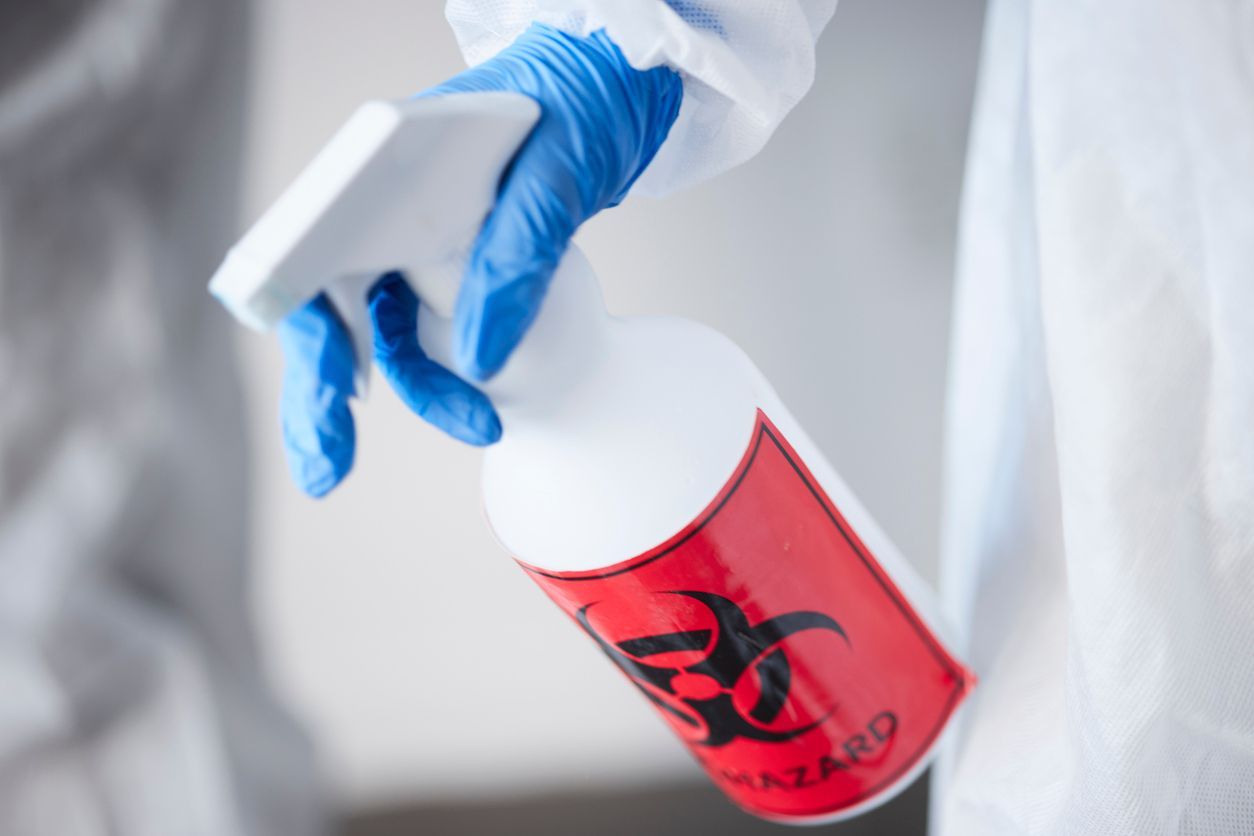
Working with a professional in these situations also ensures all necessary personal protective equipment (PPE) will be used to prevent the cleanup crew from having direct exposure to the biohazard. In addition, professional biohazard cleanup companies adhere to meticulous disinfection protocols, including the use of industrial-grade HEPA filtration systems and hospital-grade sanitizers, to ensure the affected area is safe before your staff and patients return.
What OSHA Steps Must Hospitals Follow for Biohazard Cleanup?
Anytime your hospital must handle a biohazard cleanup situation where staff can potentially be exposed to blood, other potentially infectious materials (OPIM) or contaminated materials that could spread infection, you’ll need to comply with OSHA regulations regarding exposure control and waste handling. In addition, if the cleanup involves a declared emergency response or post-emergency remediation, HAZWOPER training may also be required. The best way to ensure you comply with these regulations is to outsource the task to a biohazard removal company.
The following essential steps are necessary to comply with OSHA regulations.
Write and Maintain an Exposure Control Plan
Having a clearly documented Exposure Control Plan is important to ensure all workers tasked with biohazard cleanup understand the risks associated with this job and how to minimize them. According to OSHA requirements, your plan must:
- Identify at-risk job roles
- Outline safety protocols and protective measures that will be taken during cleanup
- List all post-exposure procedures that will be followed
- Be reviewed and updated each year
Use Universal Precautions
Universal precautions refer to the process of treating all blood and bodily fluids as infectious. This precaution helps protect cleanup crews from health risks associated with infectious diseases such as:
- Hepatitis B
- Hepatitis C
- HIV
Provide Appropriate PPE
Everyone involved with the biohazard cleanup process must be provided with the necessary PPE, including:
- Protective clothing (aprons or gowns)
- Gloves (latex, nitrile or vinyl)
- Face shields or goggles
- Respirators (when necessary)
In addition, all workers must be properly trained on how to safely put on, use and remove all PPE.
Utilize Engineering and Work Practice Controls
OSHA regulations require the use of the following tools and best practices to protect all workers during the cleanup process:
- Handwashing stations
- Sharps disposal containers
- No recapping of needles
- Proper equipment cleaning procedures
Adhere to Mandated Biohazard Waste Disposal Protocol
OSHA regulations have established the following process for disposing of biohazard waste:
- Storing waste in red biohazard bags
- Using puncture-proof sharps containers
- Labeling all bags and containers with the biohazard symbol
- Using certified medical waste disposal services
Failing to comply with these protocols can result in regulatory fines for your hospital.
Offer the Hepatitis B Vaccine to Employees
OSHA regulations require you to provide the Hepatitis B vaccine to all employees exposed to bloodborne pathogens. The vaccine must be provided at no cost to employees, and it must be offered after training but before pathogen exposure. You must also provide documentation of any employees who decline to take the vaccine.
Provide Annual Bloodborne Pathogens Training
Any workers responsible for biohazard cleanup must receive annual training regarding:
- The risks of bloodborne pathogens
- How to properly use all PPE
- Emergency response procedures
- Best practices for safe biohazard cleanup
In addition, training records must be kept for at least three years to provide documentation in the event of an OSHA inspection.
Implement Post-Exposure Protocols
OSHA has enacted the following requirements to limit the health risks to any employee exposed to infectious materials:
- Conduct a medical evaluation right away
- Document the incident
- Provide testing and follow-up care
- Keep the records of the incident confidential
HRS Restoration Can Help
At
HRS Restoration, we provide comprehensive biohazard cleanup services for hospitals in Denver and the surrounding areas. We offer 24/7 emergency response services and can arrive at your facility shortly after receiving your call. This rapid response time plays a critical role in your ability to minimize the health and safety risks that your staff and patients may face.
We have decades of experience handling biohazard cleanup, and our IICRC-certified technicians adhere to strict OSHA protocols to ensure your hospital is sanitized properly. We use the most advanced tools, including HEPA air scrubbers and ATP testing, to ensure your facility is completely decontaminated and safe for inhabitation. We also work directly with your insurance company to facilitate a smooth claims process that allows you to maximize the benefits to which you’re entitled.
Contact us today or call
303-495-2977 for emergency biohazard cleanup help. HRS Restoration serves hospitals in Denver and throughout the Front Range.